Night shift made calmer: fewer turns, fewer alarms, better skin. Practical fit/stack steps + OEM/ODM options from Lovinhug—adult diapers with tabs that work.
Nights get noisy for three reasons: routine “flip & feel” checks, non-actionable beeps, and leaks that show up right after you just changed someone. That loop may wakes residents, and still doesn’t guarantee intact skin. You need tighter flow:
turn smarter, not more
check smarter, not louder
stack product the right way
set alarms to signal action
Repositioning: Fewer Turns, Still Safe
Blanket “turn every two hours” policies don’t match real residents, real surfaces, and staffing. At night, think risk-stratified intervals:
Higher risk / early IAD: tighter interval, more eyes on skin.
Low-to-moderate risk on good foam surfaces: you can trial a longer interval if skin stays clean and dry and morning checks look good.
Unstable / ICU-level care: follow your unit protocol.
Key is progressive extension with feedback: move from shorter to longer only when morning skin audits stay green. If the wetness indicator or backsheet tells a different story, roll back the interval.
Wetness Checks: From “Flip & Feel” to “Signal & Act”
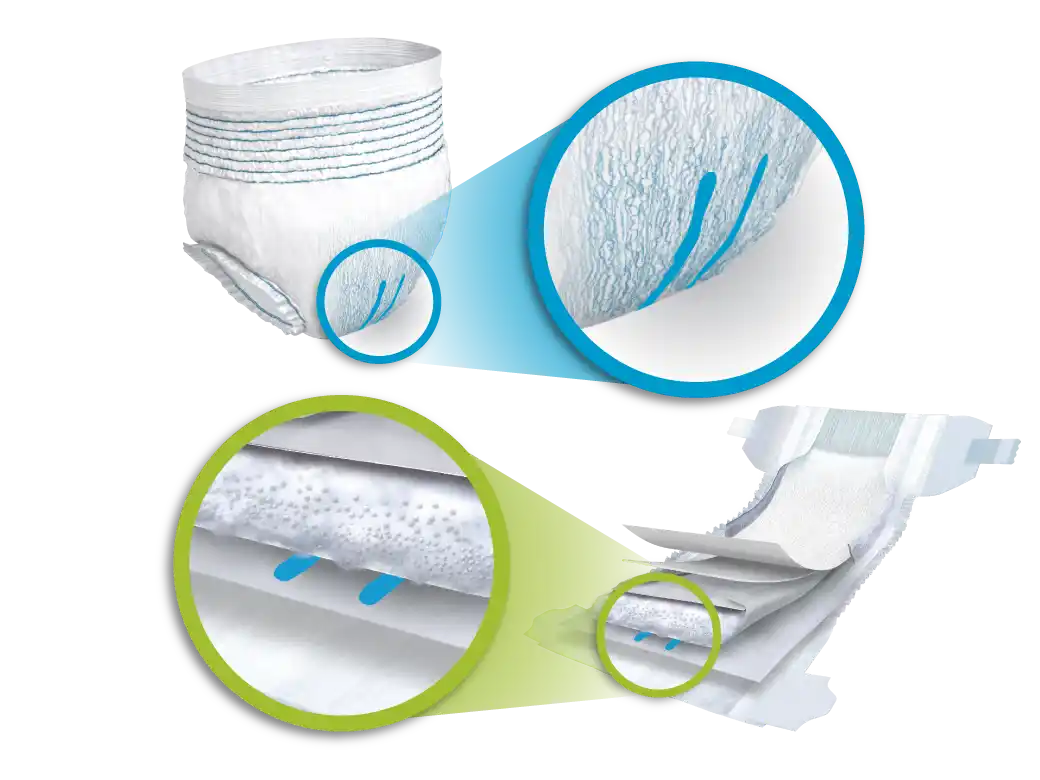
Wetness indicators on briefs (watch the color change).
Scheduled cueing tied to risk and fluid load.
Visual checks at natural touchpoints (med pass, safety rounds), not random five-minute pop-ins.
When checks are planned and discreet, residents sleep, and staff move with purpose. If it’s not wet, don’t open it. If it is, change with full skin protocol (cleanse → protect → refasten).
Booster Logic 101
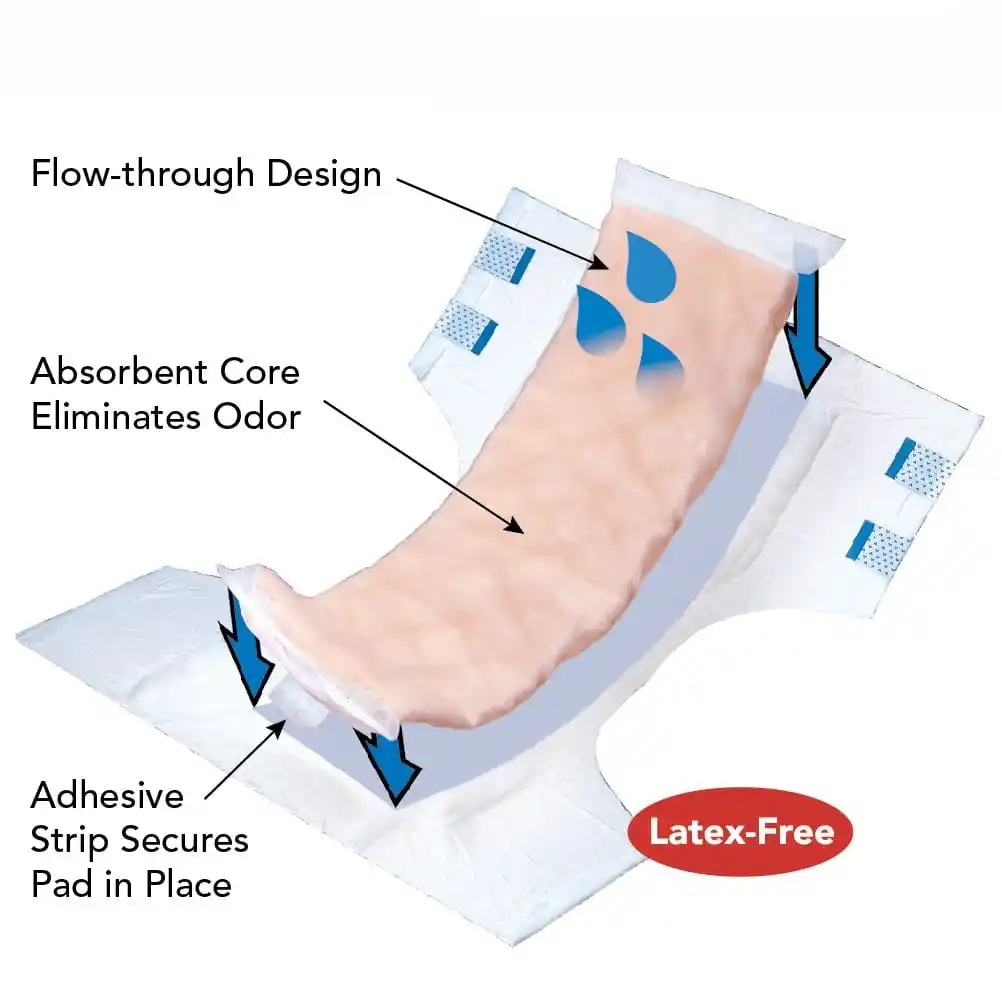
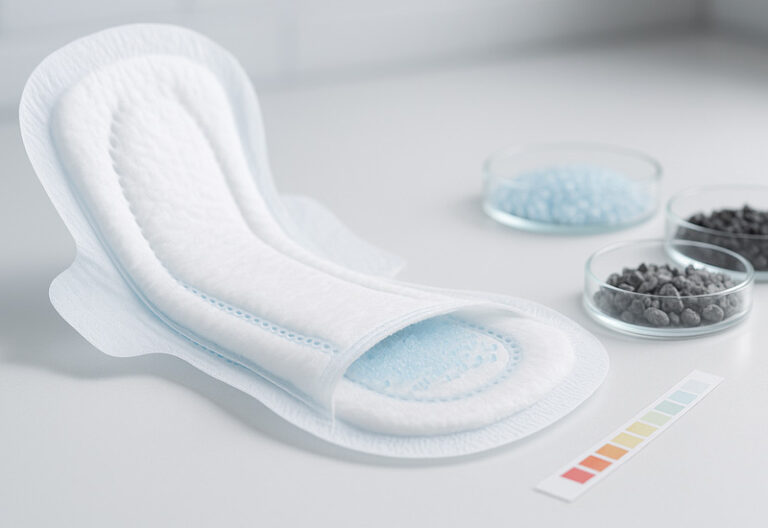
Night equals longer wear. Longer wear equals more chance to leak—unless you give the core room to breathe and wick. That’s where flow-through boosters help. They pass surplus fluid into the brief’s SAP core instead of trapping it at the top. You get:
less front-end flooding
more even distribution
fewer sudden side leaks
But use them with intent:
If leaks are the driver, boost.
If IAD or maceration is the driver, fix skin steps first (cleanser, barrier, dryer window) and watch wear time.
Never stack waterproof pads inside the brief. That blocks wicking and backfires.
Fit & Seal: The 5-Point Night Check
A high-capacity brief only works when it seals. Night fit is different from day fit (more hours, more supine time). Use this 5-point routine:
Sizing: tape where the landing zone sits flat; if it pulls or buckles, size is off.
Leg cuffs: untuck, then tuck-under standing gathers so they stand true (no “rolled cuffs”).
Angle: tape top tabs slightly downward, lower tabs slightly upward; you want a cradle, not a belt.
Front rise: make sure the front sits high enough; low rise = front blowouts.
Backsheet check: if the outside is damp to touch, you either overfilled, under-sealed, or blocked wicking.
If you need a heavy-duty brief for bigger bodies, place it where it’s used, not in a single “diaper shelf.” Link the product to the scenario so staff grab the right one on autopilot.
Night setups with larger waist: 3XL Adult Diapers with Tabs for extended wear windows and stronger tabs during repositioning.
Standard builds: XL Adult Diapers with Tabs paired with a flow-through booster for “mid-night flooders.”
Alarm Hygiene
Alarms should trigger action. Clean it up:
Start with risk: who actually needs bed-exit audio vs. silent visual?
Tighten thresholds for real risk; loosen or disable where it’s just noise.
Route to the right sink: use pagers or hallway lights at night; keep rooms quiet.
Audit weekly: count non-actionable alerts; kill the top two offenders.
Pro tip: if your “wetness alarm” goes off too early, it’s not an alarm issue; it’s a product stack issue. Fix absorbency and seal, then revisit thresholds.
The Night Map
Night step
What to do
Why it matters
What to watch
Risk tag
Label resident as higher / moderate / lower night risk
Sets the turn interval; avoids one-size-fits-none
Morning skin notes
Surface check
Confirm high-density foam or equivalent
Allows safer interval decisions
Bottoming-out signs
Interval
Start tighter for higher risk; consider longer only if morning skin stays good
Fewer unnecessary turns = more sleep
Any red/fragile areas
Wetness checks
Use indicators and planned rounds
Cuts random wake-ups
Indicator states
Product stack
Brief + flow-through booster (when leaks, not IAD)
Extends wear without blocking wicking
Backsheet damp?
Fit/Seal
5-point routine before lights-out
Stops side/front blowouts
Leg cuff roll
Alarm hygiene
Route to pager/visual; remove non-actionables
Fewer beeps; faster real response
Weekly noise chart
Night Skin Protocol
Cleanse gently (no harsh rubbing).
Pat dry. Short air window if feasible.
Apply barrier where needed (perineum, folds).
New booster (if used), then new brief.
Fit & seal—say it out loud: cuffs, angle, rise.
Note any pink or fragile skin. Small problem now beats big problem later.
Where Lovinhug Fits (do the job, not just the spec)
Lovinhug runs as a manufacturer and OEM/ODM factory with ISO-style quality systems (CE, FSC, and new cGMP certificates available). That matters at night because:
Consistent cores wick repeatably; your intervals don’t get random.
Refastenable tabs survive repositioning.
Scaled sizes cover real bodies—so fit and seal hold when residents roll or scoot.
Private-label lets you standardize SKUs across facilities, so nurses always know what they’re grabbing at 02:00.
FAQ From The Floor
Q: Can we push every resident to longer intervals? A: No. Start from risk, not convenience. Stretch time only if skin and linens stay good.
Q: We’re still getting side leaks—what now? A: Re-run fit and seal. Then check front rise and booster placement. If the backsheet is damp, you’re either overfilling or blocking wicking.
Q: Do we need more tech? A: Not to start. Get process right. If you later add sensors, fold them into rounds—don’t let beeps run your unit.
Q: Which product first for night? A: A well-fitted Adult Diapers With Tabs brief matched to body size. Add a flow-through booster only when leaks drive mid-night changes. Adult Diapers With Tabs
Night-Shift Checklist
Risk tag on whiteboard (red / yellow / green)
Surface confirmed (no bottom-out)
Interval logged (and why)
Indicators instead of random checks
Brief + booster decision documented
Fit & seal verified (cuffs, angle, rise)
Alarm plan set (pager/visual preferred)
Morning skin notes placed for day shift
Why This Cuts Turns and Alarms
When checks are purposeful, you skip the noise.
When fit is right, leaks fall.
When alarms mean something, staff respond once, not five times.
When intervals match risk, you protect skin and sleep.
This is how nights feel calmer without “doing less care.” You’re doing better care, with fewer wake-ups.
Summary
If you’re speccing a night program across sites, Lovinhug can build your private-label range with stable materials, repeatable absorbency, and size runs that match your rooms. That’s classic OEM/ODM work, with CE and other certifications in place.
Thanks for reading!
Got questions or any other thing else? Fill out the Lovinhug contact form. We’ll get back fast and practical.