Odor control for Incontinence Pads: pH-smart surfaces, SAP stacks, and real adsorbents. OEM/ODM with a manufacturer who designs for skin, fit, and daily life.
Urine itself isn’t super stinky. The trouble starts when urea meets urease-positive bacteria. That reaction releases ammonia and other volatiles. When surface pH creeps up (goes more alkaline), bacteria work faster and skin gets cranky. So odor control isn’t only “more absorbent core.” It’s: keep the surface slightly acidic, block the enzyme route, and lock volatiles before they escape.
You see it after long wear, during warm weather, or when airflow is poor. Pads feel “not soaked,” yet a whiff sneaks out. That’s pH and micro-climate doing mischief.
pH: the quiet driver behind stink and skin
What happens: pH rises → bacteria flourish → more ammonia → stronger odor → higher risk of IAD (incontinence-associated dermatitis).
What to do: build a micro-acidic contact zone (topsheet chemistry), pair with a pH-buffered core, and stop rewet.
SAP basics
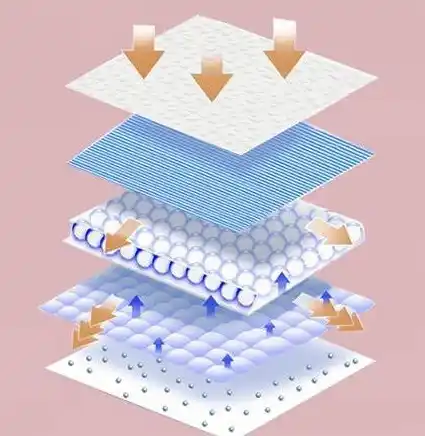
Superabsorbent polymer (SAP) pulls in liquid and locks it under load. Great. But odor control needs more than grams of SAP. You want a balanced core stack:
Surge/wicking layer to spread the first gush (prevents over-saturation hot spots that vent odor).
Pulp-to-SAP ratio tuned for “lock-in” and airspace—too dense and you trap humidity; too fluffy and you get rewet.
pH-aware additives in the core to buffer toward mildly acidic.
Optionally, enzyme management (some cores are designed to slow or even inactivate urease activity).
Lovinhug focuses on that system view—not only SAP load. If you’re sourcing OEM/ODM from a manufacturer like us, ask for topsheet pH spec range, rewet under pressure, and odor panel notes, not only “absorbency ml.”
Field pain points we hear all the time
“Pad feels dry, but there’s a faint smell after a commute.” Likely cause: local pH rise + micro-rewet near the topsheet. Fix: acidic topsheet finish + tighter surge layer to move liquid faster; consider absorber blends in the core for volatiles.
“Clients change more often than needed because of odor anxiety.” Cause: early-stage volatiles vent before the core fully locks. Fix: add a gas-adsorbent, check cuff fit and adhesive shy areas that create leakage channels for smell.
“Night use, room still stale in the morning.” Cause: warm, enclosed micro-climate; volatile build-up. Fix: blend physical adsorbents in the pad (and optionally carbon in the disposal container), and coach on rotation schedule.
“Men’s guard leaks smell at the edges.” Cause: mis-alignment with anatomy, weak adhesive, or compressed leg elastics. Fix: revisit guard geometry (cup depth), better adhesive track, and dual-elastic profile. Sometimes the easiest move is a pad shape designed for male flow path.
What actually catches the odor?
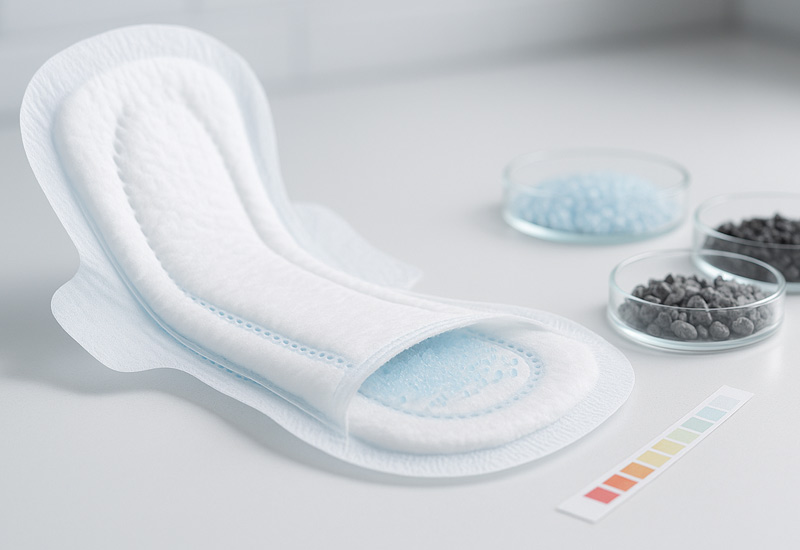
Fragrance masks, but you want capture. Three workhorses:
System
What it targets
Where it sits
Pros
Watch-outs
Use cases
Activated carbon
Phenolics (like p-cresol), a range of VOCs
In core or laminated patch
Broad spectrum, proven
Can load with moisture; needs airflow balance
Overnight pads, disposal bin inserts
Zeolite (clinoptilolite etc.)
Small/polar molecules including ammonia
Core blend or coating
Selective, heat-stable
Powder handling; choose pore size wisely
Day pads, warmer climates
Zinc ricinoleate
Amines/sulfurous compounds
Coating/dispersion in nonwoven
Chemical complexation, long-lasting
Needs proper dispersion to avoid spots
Premium lines, “no-perfume” briefs
None of these replace pH control. Think layered defense: pH-friendly surface → fast move → lock → adsorb gases. That stack wins.
Handling rewet
You can smell a pad that “burped” a little moisture back to the topsheet. Rewet pushes volatiles to air. Controls:
Compression-set-resistant core (so it doesn’t pancake under body weight).
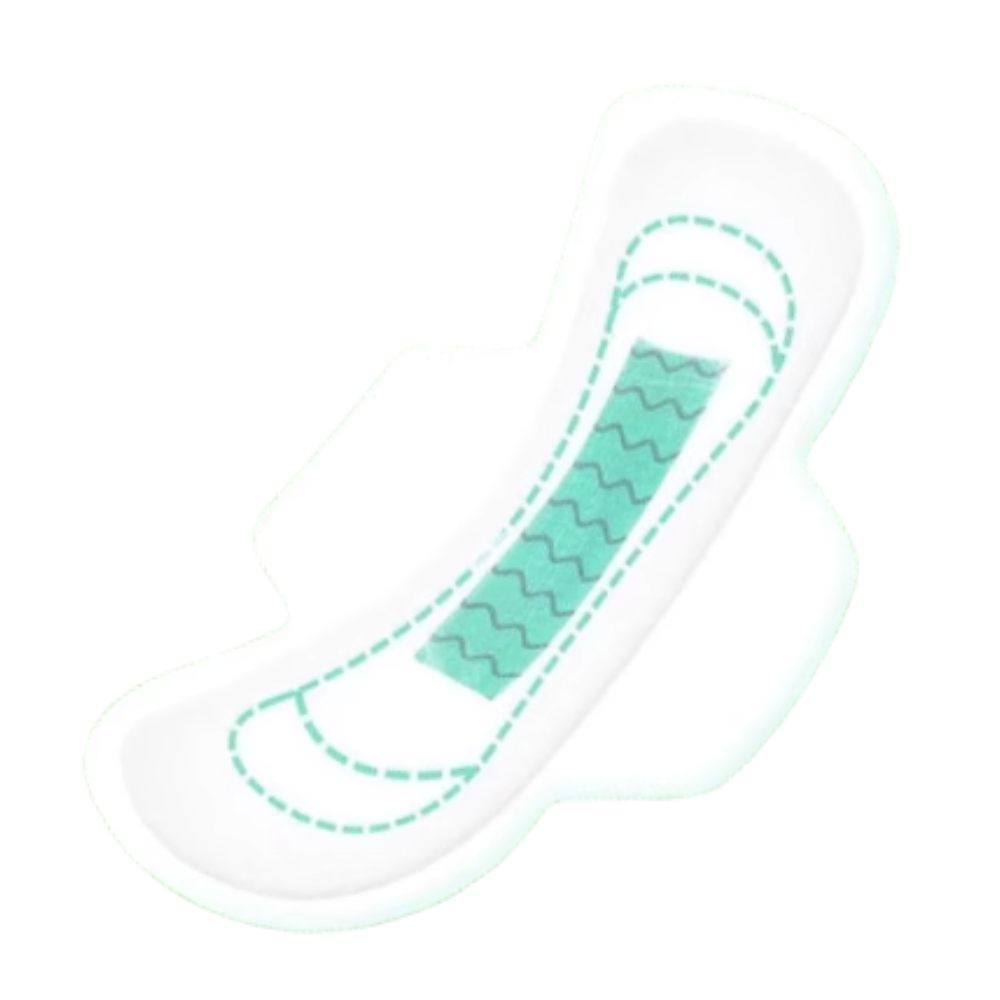
Channel/capillary design to route liquid sideways, not back up.
Elastic leg cuffs that seal consistently without over-tension (over-tension = gaps after sitting).
Tip: don’t overspec; bulk can warm the micro-climate.
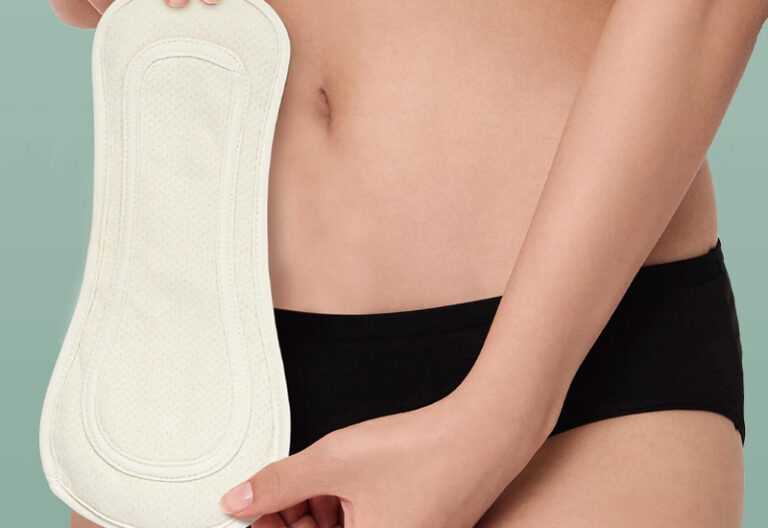
High Capacity Women’s Heavy Flow Pads Manufacturer
Extend the window without swapping the base pad
Add a Adult Diaper Booster Pads layer. Flow-through logic lets the base pad keep doing the heavy lift.
Tip: don’t stack too many; airflow matters for odor, too.
pH-smart routines that actually help
Pre-emptive change before long seated periods (train rides, flights). You just need to avoid pushing to the edge.
Skin cleanse with low-pH wipes; pat dry, don’t over-rub.
Rotate storage; don’t leave used pads sealed warm too long—volatiles build inside.
Night setup: choose a pad with adsorbent blend; crack a bin filter (carbon or zeolite) if a stale room bothers you.
These are small, but they stack up—less odor, calmer skin.
How Lovinhug builds pads for life
LOVINHUG is a manufacturer with ISO 13485 culture, serving distributors, hospitals, nursing homes, retailers, and DTC brands across North America, Europe, MENA, SEA, LATAM, and Oceania. Our OEM/ODM teams don’t chase a single headline metric. We design for system performance:
Contact pH window (surface feel over time).
Wicking map (how a surge spreads in seconds, not minutes).
Rewet under pressure (because bodies move).
Odor adsorption mix matched to the use case (day vs. night, warm vs. cool climate).
Fit engineering: cuff height, elastic recoil, adhesive path, and chassis drift
“More SAP fixes smell.” If rewet and pH go wrong, odor still escapes. Balance surge layer, pulp-SAP ratio, and airflow.
“One pad fits every climate.” Warm, humid days need more gas capture and breathable chassis.
OEM/ODM checklist
Target contact pH behavior across wear time.
Rewet under load and a short sit-stand note.
Odor system: which blend (carbon/zeolite/zinc ricinoleate) and at what layer.
Topsheet finish: any weak-acid treatment or pH-friendly lotion.
Fit validation: cuff height, adhesive route, guard geometry for men’s SKUs.
Disposal guidance: optional bin filter note for facilities.
Wrap-up: odor control is a stack
Hold the pH line, move fluid fast, lock it down, and catch the gases. Nail fit so volatiles don’t sneak out the edges. Use routines that respect skin and time. When you need a partner, pick a manufacturer that gets both the science and the day-to-day. Lovinhug does OEM/ODM with that exact mindset—practical, testable, humane.
Questions or custom brief? Please fill out the contact form on lovinhug, we’d love to help.