Solo vs two-caregiver for bedbound changes: safe moves, skin protection, and brief fit. OEM/ODM Adult Diapers With Tabs from Lovinhug. Get guidance, get samples.
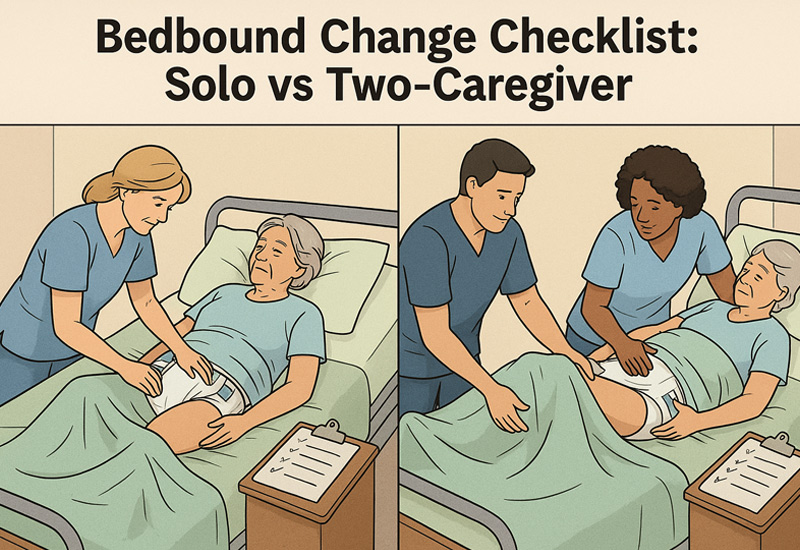
You’re standing at the bedside. The brief is soaked, the linens need swapping, the clock is not your friend. Do you go solo, or do you call in a second pair of hands? This choice isn’t about pride or speed; it’s about safety, dignity, and skin. Below is a practical, field-tested way to decide fast, work clean, and protect the person in your care.
Safety first: SPHM thinking
Think like this:
Plan the move before you move.
Use kit (profiling bed, slide sheet, in-bed turner, hoist/stand-aid where appropriate).
Know the load: if a manual lift would be heavy or awkward, it’s not a one-person job.
Environment: brakes on, bed height to your hips/waist, rails used smartly (near rail down to work, far rail up to protect).
That’s the frame. Now, how to pick solo vs two.
Single-handed care with the right setup
Solo can be the right call only if a quick risk screen says “safe enough,” and your equipment matches the task. Use these asks:
Stability & cooperation: The person can follow simple cues or at least won’t fight the turn.
Low-friction help: You have a single-carer slide system or an in-bed turner that’s designed for one.
Bed does the heavy lifting: Electric profiling bed for height and micro-tilt; you’re not muscling the roll.
Reachable supplies: Wipes, barrier, clean brief, underpad — all staged within arm’s length.
Exit plan: If anything feels sketchy, stop and call a second caregiver.
When two caregivers are non-negotiable (double-handed by design)
Standard slide sheets for bigger turns/repositioning — many services treat this as a two-person technique.
Heavier, unpredictable, or low-tone bodies where control is tough without a second set of hands.
Heavy soiling where one caregiver manages the person and the other keeps the field clean and moving.
Solo vs two-caregiver — quick field guide
What you see in the room
Safer pick
Why this pick
Helpful kit & workflow
Matching brief idea
Person stable, cooperative; powered bed; single-carer slide tech
Solo
Minimal load + controlled micro-turns
Bed height; far rail up; stage wipes/underpad; pre-folded brief
Adult Diapers With Tabs with refastenable tabs for quick micro-adjusts Adult Diapers With Tabs
Solo if assessed, equipped, and safe. Two if the turn, load, or mess says so. No shame calling backup. Smart is safe.
Bedbound change, step by step
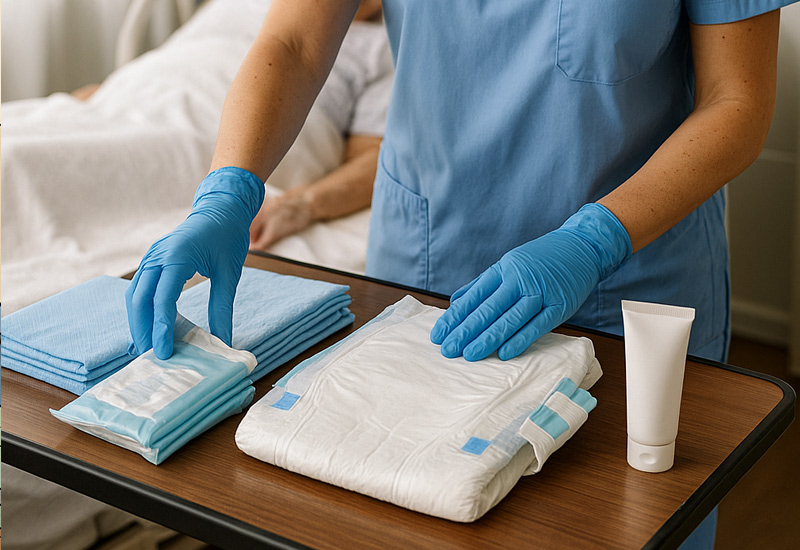
Prep the space Hand hygiene. Gloves on. Brakes on. Bed to working height. Far rail up, near rail down. Privacy. Line up: clean brief, wipes, warm water if used, barrier, trash, clean underpad. If solo, everything within reach.
Protect and position Slide a clean underpad under hips with a tiny hip lift (or micro-tilt the bed). If using a slide system, set it now. Explain what you’re doing — short, calm sentences.
Remove & contain Open tabs, fold the front down, roll the soiled brief inward, use the brief like a scoop to contain mess. If two carers, the second person manages linen traffic. If solo, work in small zones; don’t over-reach.
Cleanse → dry → barrier Front-to-back, no back-and-forth. Pat dry — no scrubbing. Thin layer of barrier (zinc, petrolatum, dimethicone, acrylate are common families). Thin is plenty; caking traps moisture and friction. Skin don’t love that.
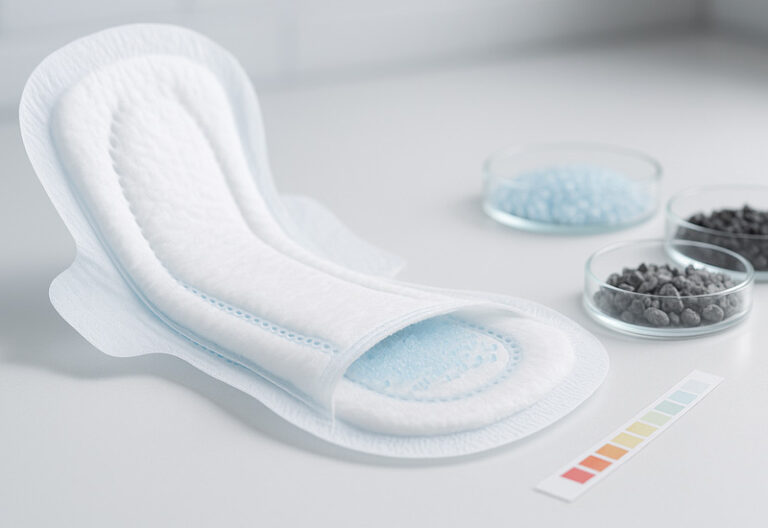
Place the new brief Slide the back panel under the hips while the person is on their side. Align the backsheet landing zone to the small of the back. Roll back, bring the front panel up, angle the tabs slightly downward for a leg-hug without pinching. Check cuff evert (cuffs out, not tucked). Quick check of the wetness indicator later helps trend timing.
Reposition & finish Recenter. Smooth wrinkles. Bed down. Call bell within reach. Gloves off, hand hygiene. Document skin observations and what you did (barrier applied, any redness, any escalation).
Skin integrity: win the IAD battle every single time
The fastest way to lose ground is skipping dry or barrier. Every episode means: clean → dry → protect. Go gentle. Moisture + friction = IAD. If skin already irritated, keep the layer thin and avoid harsh wipes. Make the brief fit do most of the containment work — not the skin.
Fit cues that matter:
Chassis alignment: backsheet landing zone at the small of the back; if it’s too low, you’ll get rear leaks.
Gasket check: leg cuffs everted and springy; if tucked, you’ll get side blowouts.
Front rise: too low in front? Expect overflow under the belly. Raise and retab.
Common pain points → quick fixes
“Tabs keep popping.” Dry the landing zone; if lotion or barrier got on the panel, wipe it. Refastenable frontal panels like on Adult Diapers With Tabs help you retab without tearing the topsheet.
“Side leaks on the turn.” Check cuff evert and tab angle. If body mass presses laterally, go up a chassis width (e.g., XL Adult Diapers with Tabs) to gain leg channel room.
“Too much rolling for one person.” Solo isn’t mandatory. Pause. Call second caregiver. Or add a proper in-bed turner/single-carer slide system before you try again.
“Redness around sacrum after night shifts.” Increase micro-turns during changes, add a breathable underpad, verify barrier is thin and even. Don’t scrub. Pat.
Scenarios
Home night shift, small flat, one carer Electric bed, single-carer low-friction liner, staged kit. Short micro-turns; cleanse-dry-barrier; quick retab. Dignity stays high because exposure time is short. Solo works here.
Med-surg unit, post-op with low tone Standard slide sheet. Two caregivers. One leads the count-of-three, the other protects the line and dressings, swaps linens, and keeps the field clean. No rushed moves. Double-handed is the safe choice.
Long-term care, bariatric resident with frequent side-leaks Double-handed for turns; pick a brief with strong cuffing and frontal panel like Professional Leak Proof 2XL Adult Diapers with Tabs. Less retabbing, less shear time, fewer linen changes.
How Lovinhug fits your day-to-day
Lovinhug is an Adult Diapers With Tabs manufacturer and Adult Diapers With Tabs factory with OEM/ODM support — built for teams that live in real rooms, not glossy brochures. We serve distributors, retailers, medical suppliers, hospitals, nursing homes, and DTC brands across North America, Europe, MENA, SEA, LATAM & Oceania. Our range covers tabbed briefs, pull-ons, pads/liners, underpads, wipes, and ABDL. Certifications include Adult Diaper CE, FSC, and NEW CGMP. Need a private-label brief with a crisp frontal panel, high-visibility wetness indicator, or a softer topsheet? We do that, without drama.
Wrap-up: pick the team size, protect the skin, keep dignity high
Choose solo only when the risk screen, equipment, and space say you can do it without hauling the person or breaking your body. Choose two caregivers when the move, the slide sheet, or the mess demands clean choreography. Either way, win the skin: clean → dry → barrier, fit the brief right, and keep turns gentle.
If you’d like help mapping your OEM/ODM brief spec to your typical shift scenarios — fill out the Lovinhug contact form on our site. We reply quick.