Hospital OEM/ODM guide for Adult Diapers With Tabs—how to go from prototype to production fast. Compliance, validation, private-label setup with LOVINHUG manufacturer.
This guide shows how to go from a working prototype to stable production with fewer surprises.
OEM vs ODM: pick your lane, own the risk
Going OEM? You bring the design, we build to print. Going ODM? You leverage our platform, then customize fit, core build, and packaging.
Hospitals don’t care what you call it. They care about reliability, traceability, and post-market support. The legal “manufacturer” on the label owns the tech file, quality system alignment, vigilance, and recalls. If you private-label, you still carry the load.
Quick read:
OEM = stronger control of spec and IP, heavier NPI load.
ODM = faster ramp using a proven stack, tight change control, clear quality agreement.
Either way, document ownership and change-notice rules must be crystal.
Ownership matrix
Topic
OEM (you own the spec)
ODM (you use our platform)
What hospitals expect
Design file & changes
You lead; factory executes change control
Joint; base spec locked; deltas documented
Clear revision history, no surprises mid-tender
Risk management
You drive; full FMEA trace
Shared; platform risk file + your deltas
Evidence of risk control across the product life
Quality agreement
Defines roles, audits, CAPA
Same, but references platform controls
Named contacts, response times, CAPA closure
Traceability
Lot trace to raw materials
Same
Pull the thread from ward back to supplier
Post-market
You collect feedback & trend
Shared
Complaints in, actions out, feedback loop closed
Design controls & design transfer: make it manufacturable
A prototype is not a product. To cross the gap, lock the basics:
Realistic user needs from wards: night shift changes, bariatric fit, transport time between bed and chair.
Verification & validation with actual use scenarios: side-leak checks, quick-burst events, tab re-fastening after repositioning, chafing checks in warm climates.
Design transfer means the line can run it repeatably. That’s BOM, specs, test methods, sampling plans, packaging bill, and work instructions synced.
From lab bench to line
Step
What you do
Evidence you keep
Pilot run
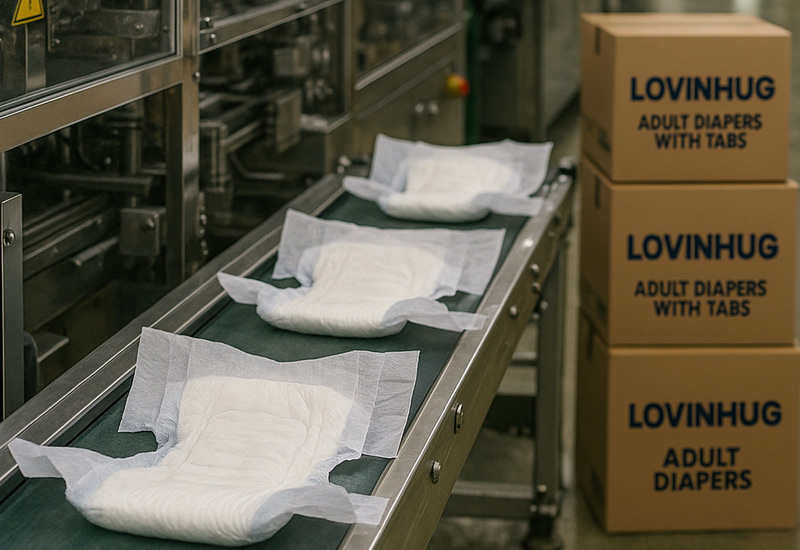
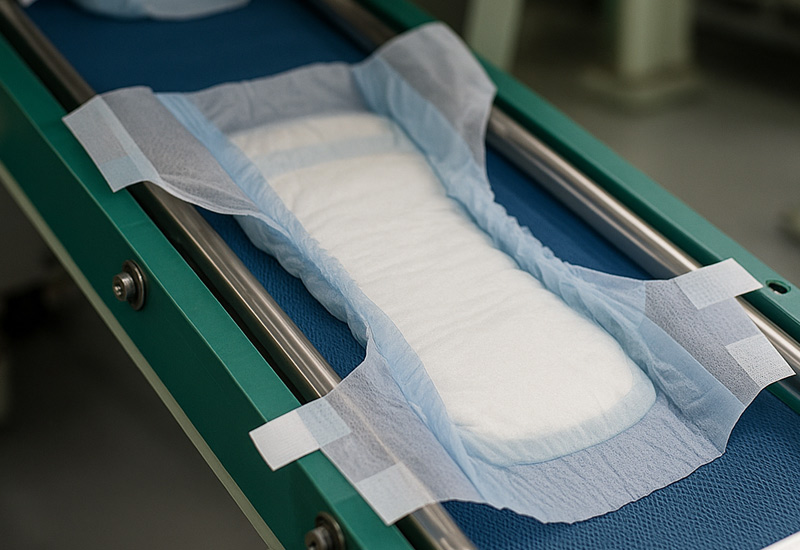
Short runs, tweak tab tension, core distribution, emboss pattern
Run reports, rejects by failure type, rework notes
Monitoring: scorecards on defects, on-time delivery, response to CAPA.
Backup plans: dual-source critical inputs to avoid scrambling during tenders.
Process validation: when end-inspection ain’t enough
Not every feature can be fully verified by checking the final diaper. Tab bond, side seam strength, or core stability across shifts—these need validated processes.
IQ (Installation Qualification): the line is installed and calibrated right.
OQ (Operational Qualification): the window of parameters that keeps the spec stable.
PQ (Performance Qualification): real runs over shifts, operators, and materials.
Set re-validation triggers: new mold, new adhesive, new substrate finish, or repeated drift in SPC charts.
Packaging, labeling, and logistics: protect the goods, protect your brand
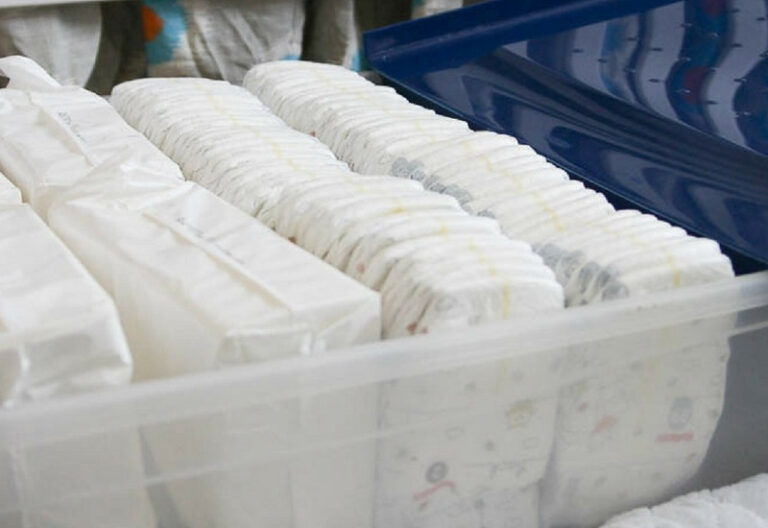
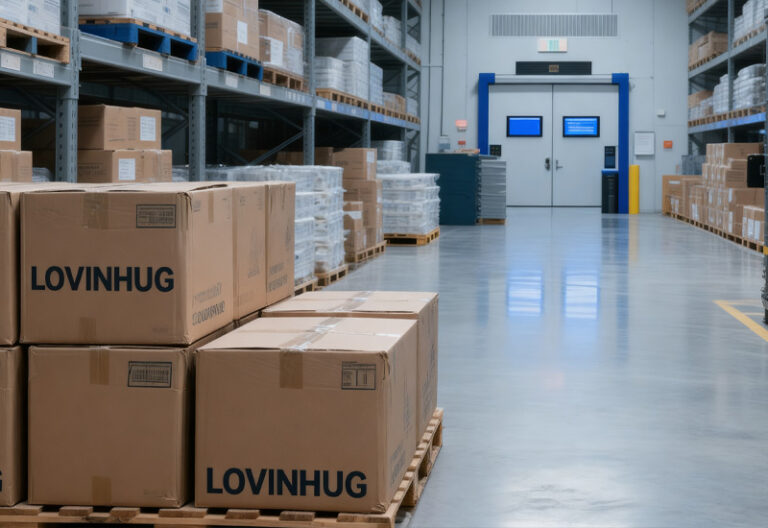
Hospitals order by case, handle by cart, stack in tight storerooms. Cartons need to survive transport, humidity, and quick grabs.
What to lock:
Pack bill with inner poly, outer case, and pallet layout.
Labeling with lot code logic that ties back to raw materials.
Handling tests: transit stress, drop tendencies from waist height, pallet over-stack.
Shelf cues: size icon, color banding, tab direction hints for faster picks.
If you ship across continents (North America, Europe, MENA, SEA, LATAM, Oceania), align case marks to the biggest buyer’s requirement, then superset it for all.
Docs & records: DHF, DMR, DHR (keep it tight)
You’ll hear these acronyms a lot:
DHF (Design History File): the story of how you built the spec.
DMR (Device Master Record): the recipe the factory uses daily.
DHR (Device History Record): proof each batch followed the recipe.
Hospitals won’t ask for all of it, but large systems, regulators, and auditors might. So it will be better if you change logs are tidy.
Hospital readiness: tenders, compliance, and service
Hospitals ask straight questions:
Who’s the manufacturer? Show certs (Adult Diaper CE, ISO 13485, FSC, NEW cGMP).
Can you customize fit panels, core strategy, or private-label artwork?
How fast can you send production-grade samples?
Do you have complaint handling and a response clock?
Can you trace lots and run a mock recall drill?
Make a one-pager: brand name, product family, certs, capacity ranges, and your contact window.
Use cases: match hospital needs to real products
Different wards. Different pain points. Choose the right brief for the job.
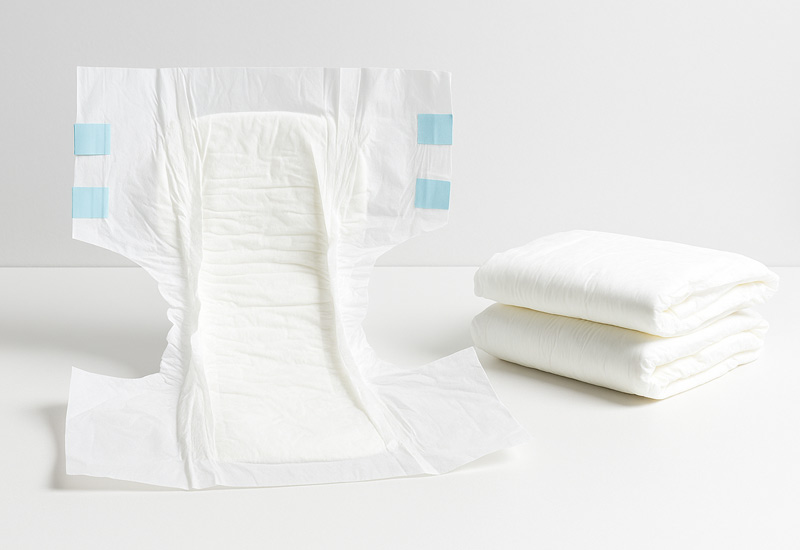
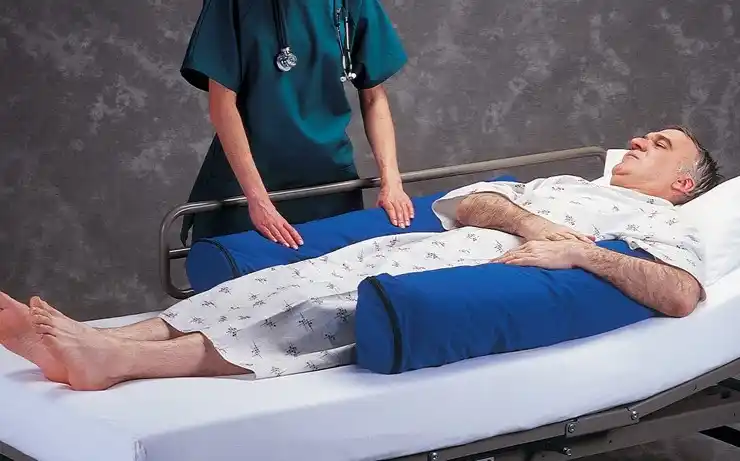
Long-stay & night shift: look for strong core stability and tab re-fastenables. See Adult Diapers With Tabs for the family overview and private-label routes with LOVINHUG as the manufacturer.
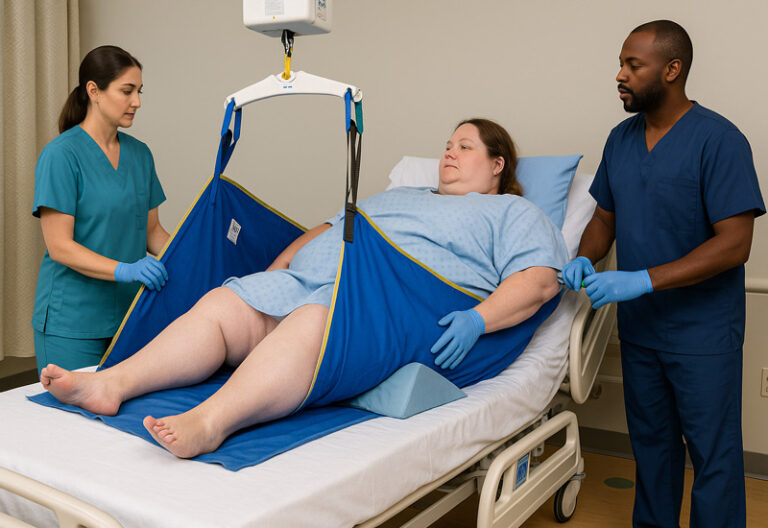
Bariatric care: you need more waistband ease and durable tabs that don’t pop during repositioning. Shortlist 3XL Adult Diapers with Tabs for bariatric scenarios; we can customize landing zones and printing.
Standard adult sizes in mixed wards: balanced absorbency with easy training for new staff. See XL Adult Diapers with Tabs for mainstream use and fast ramp in hospital chains.
Factory-floor realities: what actually trips teams up
Tab peel variability. Adhesive batch shift or room temp swing? Tabs peel weird. Guardrail: incoming adhesive checks, line temp logs, and quick re-set SOPs.
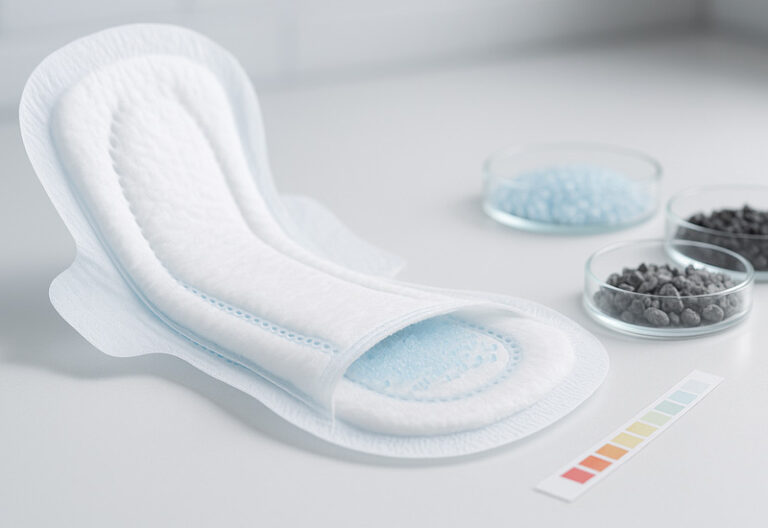
Core slumping. SAP distribution drifts when line speed changes; patients feel wet spots. Fix with emboss pattern tuning and felt tension checks.
Nonwoven fuzz. New lot feels “soft” but sheds more. Set lint checks at incoming and swap roller textures in-process if needed.
Wetness indicator fade. Long transit plus humidity? Indicator looks tired. Use stronger carriers and write a shelf-simulation test.
Training gaps. New operators “think they got it” then miss little tells. Keep golden samples on the line and teach what “good” actually looks like.
Private-label playbook with LOVINHUG
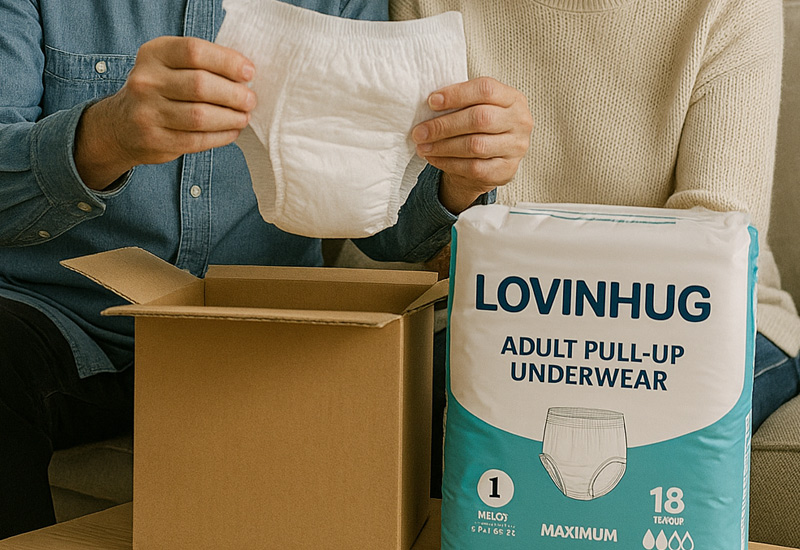
LOVINHUG is a manufacturer focused on adult incontinence, with OEM/ODM for retailers, DTC brands, hospitals, and nursing homes. We run factory setups that are built for private-label briefs, pads, pull-ups, underpads, wipes, and ABDL lines. Reach covers North America, Europe, MENA, SEA, LATAM, and Oceania.
Launch kit. Final artwork, carton scheme, training sheet, complaint channel, change-control cadence.
Prototype-to-production map
Phase
Hospital buyer cares about
Your moves
Proof points
Concept
Fit, comfort, change time
Define user needs, cost envelope, packaging form
Brief, risk sketch
Prototype
Leak control, tab strength
Iterate core, ADL, guards, tabs
Test logs, nurse feedback
Pilot
Repeatability, QC clarity
Establish sampling, line settings, SPC
Pilot report, golden set
Validation
Stable outputs
IQ/OQ/PQ, re-validation triggers
Protocols, summaries
Launch
Supply, service
Artwork, case marks, service SLAs
Artwork approval, training sheet
Scale
Consistency across sites
Dual-sourcing, change control
Supplier scorecards, CAPA trail
Compliance that doesn’t slow you down
Certifications aren’t trophies; they’re passports. For adult briefs, keep CE alignment clean, maintain ISO 13485, use FSC where paper-based components are concerned, and stay current with new cGMP language. Put cert scans in your tender pack. Keep them updated before they expire.
Commercial value: why this matters to hospitals (and to you)
Hospitals pay attention to three things:
Risk off. Stable quality, clear documentation, fast complaint responses.
Staff time. Products that are easy to grab, orient, and apply save minutes on every round.
Continuity. Zero drama in the supply plan. If something changes, you tell them early with options.
Do this well and you win renewals. Keep doing it and you build a moat. LOVINHUG plays long-term: fewer promises, more deliveries.
Wrap-up
Move from prototype to production with clear ownership. OEM gives spec control; ODM speeds ramp. Hospitals need reliability, traceability, and support. Lock design transfer, validate key processes, maintain DHF/DMR/DHR, and enforce change control.
If you wanna talk real specs, sample paths, or tender prep, fill the contact form—LOVINHUG will respond fast and straight. We’ll help you choose OEM vs ODM.